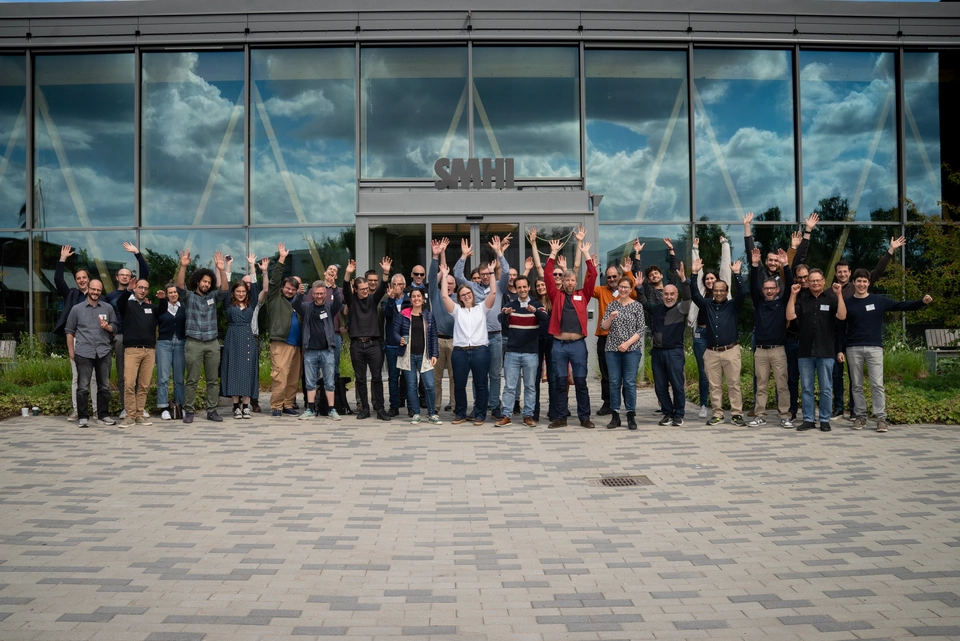
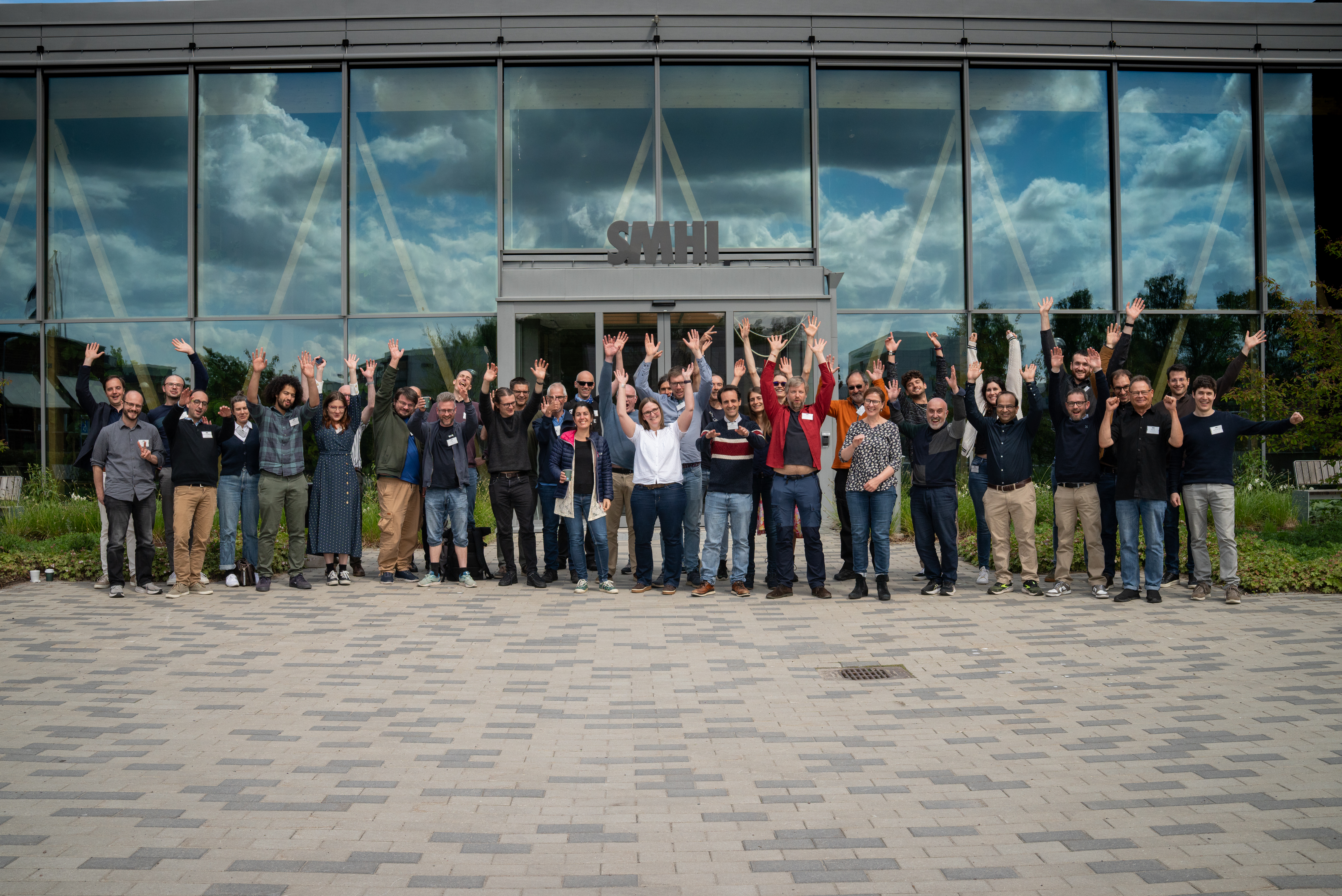
From 19 to 21 May 2026, nearly 80 participants — both onsite and online — gathered in Norrköping, Sweden, for the 9th ENES HPC Workshop, hosted by the Swedish Meteorological and Hydrological Institute (SMHI) and organised by ESiWACE3. The workshop once again provided a key forum for the European weather and climate modelling community to exchange ideas at the intersection of high-performance computing (HPC), data science, and artificial intelligence.
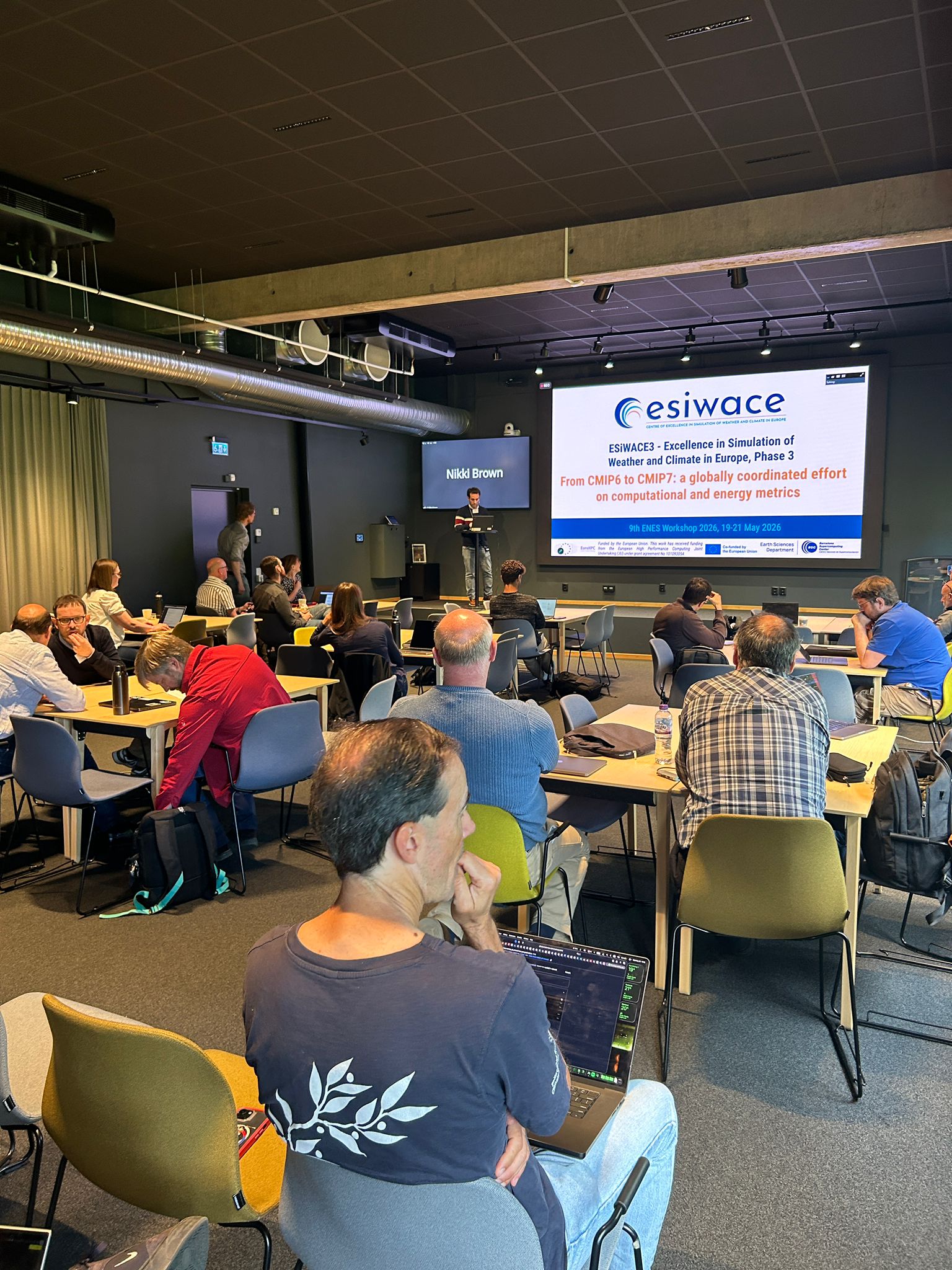 The event opened with welcome remarks from Mario Acosta (ESiWACE3 PI) and Torben Koenigk (SMHI), who highlighted the importance of collaboration across institutions and disciplines to address the growing complexity of next-generation Earth system modelling.
Across four thematic sessions, the programme explored key challenges and opportunities shaping the future of the field.
Session 1 – European and International Collaboration focused on major community initiatives and research infrastructures supporting Earth system modelling in Europe and beyond, including digital twins, coordinated modelling frameworks, and collaborative HPC efforts across institutions.
Session 2 – Performance and Accelerators addressed the increasing need for efficient and portable modelling codes, with discussions on GPU porting, performance optimisation, and emerging hardware architectures such as accelerators and RISC-V, alongside efforts to improve scalability of operational and research models.
Session 3 – AI and Machine Learning highlighted the rapid integration of AI into climate and weather science, including foundation models, neural forecasting systems, and hybrid approaches combining physics-based models with machine learning to improve predictions and climate insights.
Session 4 – Data focused on the growing challenges of managing, sharing, and processing large-scale Earth system datasets, including next-generation data infrastructures, compression strategies, and workflows designed for both high-resolution simulations and AI applications.
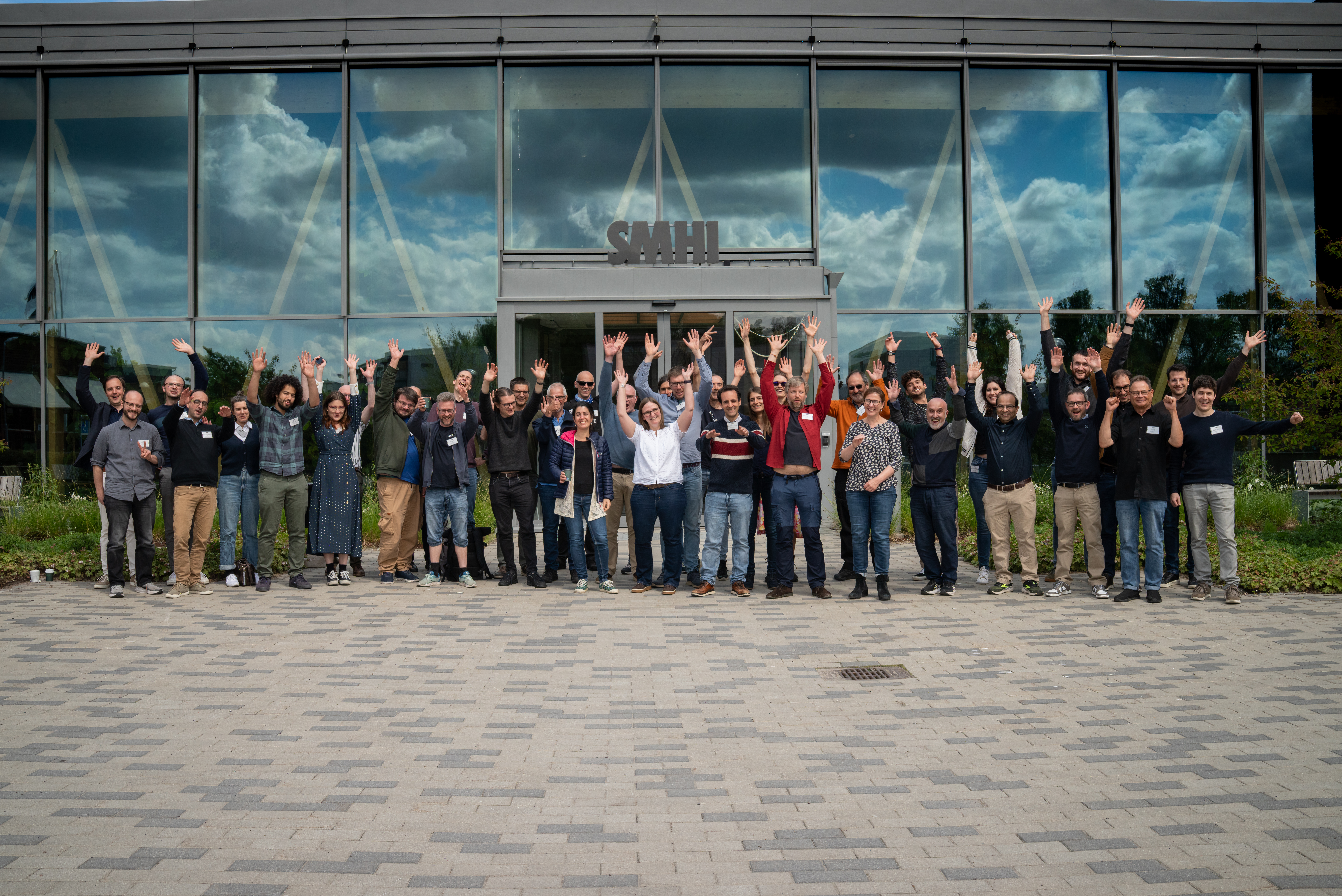 Rather than isolated developments, a strong common thread throughout the workshop was the importance of co-design between science, software, and hardware communities. From digital twins and km-scale modelling to AI-enabled forecasting and scalable data infrastructures, speakers emphasized both rapid technological progress and the need for coordinated European efforts.
The workshop also showcased how collaborative initiatives such as ESiWACE3 and the broader ENES ecosystem continue to play a central role in connecting modelling centres, HPC facilities, and technology providers.
A partner organisation was on site throughout the workshop recording highlights of the event, which will be made available soon.
Overall, the meeting reinforced the momentum toward more integrated, efficient, and AI-enabled Earth system modelling, while fostering valuable exchanges among researchers, developers, and infrastructure providers.
ESiWACE3 thanks all speakers, participants (onsite and online), and organisers for contributing to a highly engaging and productive workshop in Norrköping.